What do you feel you have learnt in the progression from the preliminary task to the product?
Wednesday, 28 March 2012
Evaluation - Question Six
Some of the different technologies that we have/could have used throughout the coursework includes;


Youtube is something that we are all very familiar with find extremley easy to use when we're searching for videos to watch. The only advanced use of youtube for us would have been learning to upload our videos to youtube and finding the embedding code, that allows you to share the video.
 Something else we have all started to familiarise ourselves with is SurveyMonkey. This is site that allows you to create and take online surveys. This was very helpful to us in the research section of our project. It is fairly straightforward and simple to use and I am sure that we will be using it again in the future.
- Blogger
- mini DV digital camcorders
- Youtube
- SurveyMonkey

I think the main piece of technology I have used throughout this whole process is defiantly blogger. Blogger is basically a diary, you record everything you do/have done etc. I think that blogger is a good idea for use to be creative when writing down everything we've done. Media is all about being creative and imaginative & having the opportunity to use blogger allows us to not only, simply type out and say what it is we have done, but also lets you add images and insert videos . I had no previous experience with blogger, although I knew what it was and allows you to do.

Youtube is something that we are all very familiar with find extremley easy to use when we're searching for videos to watch. The only advanced use of youtube for us would have been learning to upload our videos to youtube and finding the embedding code, that allows you to share the video.

Evaluation - Question Five
How did you attract/address your audience?
I think that our film grips the audience from the very start. The first shot is of a young teenage girl walking along a dark road, late at night, this is generally a normal scene in your average thriller. You will see a vulnerable character by themselves, walking home on a dark night and this point is exactly when the audience pays the most attention as they know something is about to happen! I also think that the music we picked keeps the audience interested as it has a mysterious feel to it and its melody changes quite often. This i think keeps the audience on the edge as the constant change of melody keeps thinking of what might happen next.The main character in our thriller is a young teenage, and seemingly vulnerable female, who is making her way home. I think that because of the age range we aimed our thriller at, that most could relate to her, as we've all been in that situation of being walking the street alone once its got dark and having that fear that something may happen to you.


I think that the audience would want to carry on watching on our thriller as they want to find out exactly what happens to the young girl, and who the mysterious character was in the last shot.The story to our thriller could carry on with many different endings, and I think the audience would be interested to know which route the film would take.


I think that our film grips the audience from the very start. The first shot is of a young teenage girl walking along a dark road, late at night, this is generally a normal scene in your average thriller. You will see a vulnerable character by themselves, walking home on a dark night and this point is exactly when the audience pays the most attention as they know something is about to happen! I also think that the music we picked keeps the audience interested as it has a mysterious feel to it and its melody changes quite often. This i think keeps the audience on the edge as the constant change of melody keeps thinking of what might happen next.The main character in our thriller is a young teenage, and seemingly vulnerable female, who is making her way home. I think that because of the age range we aimed our thriller at, that most could relate to her, as we've all been in that situation of being walking the street alone once its got dark and having that fear that something may happen to you.


I think that the audience would want to carry on watching on our thriller as they want to find out exactly what happens to the young girl, and who the mysterious character was in the last shot.The story to our thriller could carry on with many different endings, and I think the audience would be interested to know which route the film would take.


Evaluation - Question Four
Who would be the audience for your media product?
We had previously researched into our target audience and made surveys for people to take at www.surveymonkey.com.
The main target age for our thriller, and most of your average thrillers would be roughly around 16- 24. Because of the age we all are at the time of creating this thriller, its the perfect opportunity for us to include relatable situations etc for the audience.
From the results that we collected earlier on, in the researching part of our coursework, we noticed that due to the results we should be aiming our thriller within the 16-20ish range, which have done. We also collected information that suggested that people enjoy to watch thrillers that include mystery , which is something that we tried to include within our thriller, making the very end of our opening sequence a complete mystery to the audience and edging them to want to see what happens next!


We had previously researched into our target audience and made surveys for people to take at www.surveymonkey.com.
The main target age for our thriller, and most of your average thrillers would be roughly around 16- 24. Because of the age we all are at the time of creating this thriller, its the perfect opportunity for us to include relatable situations etc for the audience.
From the results that we collected earlier on, in the researching part of our coursework, we noticed that due to the results we should be aiming our thriller within the 16-20ish range, which have done. We also collected information that suggested that people enjoy to watch thrillers that include mystery , which is something that we tried to include within our thriller, making the very end of our opening sequence a complete mystery to the audience and edging them to want to see what happens next!


Evaluation - Question Two
Hows does your media product represent particular social groups? (gender, age, sexuality, ethnicity etc)
Our thriller only consisted of three characters, two being male and one female. This means there wasn't much female representation within the thriller, but we still managed to represent both genders within the thriller. The range of our actors was went from 17 - 50, this an extreme leap with such a big age gap, but I think that the range helped to reach out to both the older and younger generation.
There is no particular portrayal of young people within our thriller, so they wasn't necessarily shown in neither a positive or negative way. However, some people may think we have used the very common stereotype of a young vulnerable female character that just so happens to be by herself and is defenceless. This is a very typical stereotype used within thrillers, but we didn't necessarily decide on using this stereotype we just picked a female to play the character. We do not show this particular stereotype in any positive or negative way, this is just the lead character in the thriller that the audience follows through the story with, she does nothing that would suggest her type of character. We also have used another common stereotype of the 'Mysterious Character'. We did use two of these within our thriller to try and trick and play with the audiences minds a little. But the general description of the mysterious character would be that they act out of the ordinary, wear some form of dark clothing. In most thrillers you would however see this characters face, in our thriller Nightwalker , we decided to keep this characters face a completely hidden, so emphasis the mystery behind him.
We didnt have any representation of any different sexualities or ethnicity within our thriller, which may be something to consider for next time. I think that if we could redo all of this again, then we would have maybe included more characters, especially females so they were represented more and try to add in any representations we could of the different sexualities and ethnicities that there are.
Our thriller only consisted of three characters, two being male and one female. This means there wasn't much female representation within the thriller, but we still managed to represent both genders within the thriller. The range of our actors was went from 17 - 50, this an extreme leap with such a big age gap, but I think that the range helped to reach out to both the older and younger generation.
There is no particular portrayal of young people within our thriller, so they wasn't necessarily shown in neither a positive or negative way. However, some people may think we have used the very common stereotype of a young vulnerable female character that just so happens to be by herself and is defenceless. This is a very typical stereotype used within thrillers, but we didn't necessarily decide on using this stereotype we just picked a female to play the character. We do not show this particular stereotype in any positive or negative way, this is just the lead character in the thriller that the audience follows through the story with, she does nothing that would suggest her type of character. We also have used another common stereotype of the 'Mysterious Character'. We did use two of these within our thriller to try and trick and play with the audiences minds a little. But the general description of the mysterious character would be that they act out of the ordinary, wear some form of dark clothing. In most thrillers you would however see this characters face, in our thriller Nightwalker , we decided to keep this characters face a completely hidden, so emphasis the mystery behind him.
We didnt have any representation of any different sexualities or ethnicity within our thriller, which may be something to consider for next time. I think that if we could redo all of this again, then we would have maybe included more characters, especially females so they were represented more and try to add in any representations we could of the different sexualities and ethnicities that there are.
Our finished thriller!
This is our finished thriller! After all the hard work of editing, filming and even re-filming I am overall very pleased with how it has turned out!
Here is a link to a survey, if you could take the time to fill it out :)
http://www.surveymonkey.com/s/T2JWW5Q
Here is a link to a survey, if you could take the time to fill it out :)
http://www.surveymonkey.com/s/T2JWW5Q

Tuesday, 27 March 2012
Editing
We have now been editing our thriller for a couple of weeks and are at the stage where it is nearly completed and will be good enough to upload to youtube! The last bits of editing that need to be finished are adding 2 more titles in and to fix the sound problem with both the camera sound & music overlapping. I think we have edited our footage well and I'm pleased with the outcome and once all the rest is in added in it will be a finished piece!
Monday, 12 March 2012
Format Of The Titles
Media Studies (OCR)
A Film By - SEL Productions
Male Actor - Frankie MacFarlane
Female Actor - Ellie Moore
Music By - Mobygratis
Editing By - Lucy Green, Sydnie Howlett & Ellie Moore
Director of Photography - Lucy Green
Costume By - Ellie Moore
Director - Sydnie Howlett
AS Coursework G321
Robert Clack School 12127
Lucy Green (1) (Candidate Number)
Sydnie Howlett (2) (Candidate Number)
Ellie Moore (3) (Candidate Number)
A Film By - SEL Productions
Male Actor - Frankie MacFarlane
Female Actor - Ellie Moore
Music By - Mobygratis
Editing By - Lucy Green, Sydnie Howlett & Ellie Moore
Director of Photography - Lucy Green
Costume By - Ellie Moore
Director - Sydnie Howlett
Health & Safety Risk Assesment
- No filming in inappropriate locations
- Check safety of locations e.g. roads.
- Minimise risk of theft of equipment
- When filming on loction ensure teacher or responsible adult know where you are and have telephone number and when you will return
- Check all equipment is working before you leave
- Ensure you have permission for filming if necessary
- Always film with at least one other person
- Ensure you have the permission of those you are filming.
Programme Title - Nightwalker
Client - Robert Clack School
Writer - Ellie Moore, Sydnie Howlett & Lucy Green
Producer - Sydnie Howlett , Lucy Green & Ellie Moore
Director - Sydnie Howlett, Lucy Green & Ellie Moore
Major Issues - We are filming along the street & the possible risks are;
- Traffic
- Weather
- Permission of private property
- Theft
- Safety(Knowing where everyone is)
Solutions - The solutions for these issues are;
- Having a lookout to watch over the traffic, parking cars etc.
- Check the weather before going out to film, so that the camera does not get ruined.
- Having 2 people with the camera at all times
- Regular contact
Contacts - The people we can contact in case of any emergencies are;
- The School
- Parents
- Friends
Emergency Services - The local emergency services avaliable are;
- Metropolitan Police at Dagenham East
- Queens Hospital

Tuesday, 6 March 2012
Filming Process
After watching what we had already filmed and edited we decide that we wanted to completley refilm, and change the story. We want our thriller to be the best we could make it and felt that this was the right decision to make.
We have spent time thinking more in detail about how we can make our thriller more interesting and looked into more detail about the type of shots we want etc. We want our audience to enjoy the thriller and felt we need a more gripping story to it.
We are planning to refilm tomorrow and hopefully have it all finished. We will then continue to edit for the rest of the week and will hopefully have a roughly completed thriller by the start of next week.
We have spent time thinking more in detail about how we can make our thriller more interesting and looked into more detail about the type of shots we want etc. We want our audience to enjoy the thriller and felt we need a more gripping story to it.
We are planning to refilm tomorrow and hopefully have it all finished. We will then continue to edit for the rest of the week and will hopefully have a roughly completed thriller by the start of next week.

Friday, 2 March 2012

Wednesday, 29 February 2012
Filming
We are in the process of filming and will continue to do so and edit all next , to ensure we finish within our deadline.
Filming Thriller
After a discussion in our group we come to the conclusion that we should change our location to 'Robert Clack School' as it would be very convenient for our filming. However it caused issues with our main plot so we have had to make some changes.
Monday, 20 February 2012
Art Of The Title

'A compendium and leading web resource of film and television title design from around the world. We honor the artists who design excellent title sequences. We discuss and display their work with a desire to foster more of it, via stills and video links, interviews, creator notes, and user comments.'


Friday, 10 February 2012

Survey Monkey Responses
I had previously created a survey on www.surveymonkey.com . I asked a total of nine questions , hoping that people's answers would help me to understand target audience and maybe different aspects I should use within my own thriller. The responses were :


From these responses, the information we can gather is that; we should be aiming our ideas for our thriller within the 16-20 range. That on average people go to the cinema once or twice a week, which works out to roughly 4-8 times a month. We can also see that from the replies, these partiuclar people enjoy to watch thrillers. The fears people had were - 3 for spiders, 1 for clowns, 1 for sharp things, 1 for enclosed spaces and 1 for hospitals, from this we can see that the fear of spiders is fairly common. It seemed that Alfred Hitchcock was popular among the answers for peoples favourite thrillers. We can also see that people enjoy to watch thrillers that have enigmas, that keep you on the edge of your seat to see what happens next and the mystery within them. It seemed that more of the vote was 'Psychological', for being peoples favourite type of thriller, with conspiracy being second. And finally it was a fairly even vote for whether people would rather play a villian or hero in a thriller, with 'hero' just scraping by with an extra vote.
Thursday, 9 February 2012
Storyboard

This is our storyboard for our thriller 'Phonecall'
The story is based around three girls who are friends, and are all getting ready to go to a party. They each recieve a phonecall, but the audience are unaware as to who each girl is talking to. Meanwhile there is a man who is pretending to be one of the girls friends and is actually on the phone to ONE of these girls. Will the girl realise his not who he says he is before its too late? And will the audience ever find out exactly which girl he was talking to?
Friday, 27 January 2012
Analysis of past students work
This is an AS 2011 Media Studies Thriller by the former year 12 students.
SENT
- The beginning of the thriller shows them stating their school, course number, names and their individual candidate numbers.
- We then see 'Panda Productions', this is their ident that they would have likely created on the program LiveType. I think they have made this well, as the effects are simple but effective.
- They then start to used music as the thriller begins. The music is from www.mobygratis.co.uk . This is a well known site that allows people to ask for permission to use artists music, as non-copyright music has to be used for this project.
- As we continue on through the scenes, they then mention who stars within their thriller.
Treatment For Thriller
Our Thriller is Called - Phonecall!
Outline of our ideas:
1 man - He is the killer/murderer
3 girls - 2 Innocent, 1 not
1 phone call, only made to one girl
The resources we will need:
4 mobile phones
1 male, 3 female actors
3 bedroom settings
3 front door settings
Justification of ideas in relation to the genre:
Mystery
Mysterious phone call
Young naive protagonist
Outline of our ideas:
1 man - He is the killer/murderer
3 girls - 2 Innocent, 1 not
1 phone call, only made to one girl
The resources we will need:
4 mobile phones
1 male, 3 female actors
3 bedroom settings
3 front door settings
Justification of ideas in relation to the genre:
Mystery
Mysterious phone call
Young naive protagonist
Survey
Here I have created a survey on 'Survey Monkey' to gather information on audience's for thriller, if you could, please take two minutes to fill in this survey . Thank you! - http://www.surveymonkey.com/s/XR6PGWW
Tuesday, 24 January 2012
Titles
'In the cut'
- Daunting Music
- Establishing Shot
- White font
- Out of focus
- One name and job title at a time
- Title only appears 3minutes in( Different text to actors,directors etc)
- Just sound effects
- Haunting
- Colour starts to change to red
- One name/job at a time
- Establishing shot
- Titles are 3D & imposed into the shots
- Sound effects - ticking
Film Openings
Memento
Conventions - Weapon, blood
Camera - Steady cam, Use of close ups
Editing - Black and white
Sound - Depressing music
Mise-en-scene - black and white; dream/flashback, setting is dank and dreary.
Enigma - Polariod going backwards
Brick
Conventions - Mystery, curious character
Camera - Out of focus
Editing - Graphic match(links with the bracelet)
Sound - Calming music
Mise-en-scene - Dull colours, Flashback
Zodiac
Conventions - Weaponm Curious character
Camera - Long shot
Editing - Do not see the murder
Sound - 3 different types used, contrasting, both diegetic and non-diegetic
Mise-en-scene - Town setting
Target Audience
The target age for a thriller would be ranging from sixteen to about twenty-four, as this has been known to be the range that goes to see the most thrillers.
Something else to consider is the gender of your audience. You need to think about what will appeal to both the male and female genders. The general look on it would be that men enjoy watching thriller's that are gory, horror, contains lots of fighting and action scenes. Whilst women are more into psychological thrillers and pay more attension to the story and getting inside the character's head.
Another thing you should consider in a thriller is the actors that star in the film. People are more likely to go and see a film with a big named star rather than someone who has appeared in a film or two. People will also be more likely to be attracted to films that star their favourite actors/idols. Gender also comes into this again, if you were to star someone such as 'Taylor Lautner' then your more likely to get an audience filled with females. And equally if the main actor in your film is 'Angelina Jolie', your likely to have an audeince full of males.
Something else to consider is the gender of your audience. You need to think about what will appeal to both the male and female genders. The general look on it would be that men enjoy watching thriller's that are gory, horror, contains lots of fighting and action scenes. Whilst women are more into psychological thrillers and pay more attension to the story and getting inside the character's head.
Another thing you should consider in a thriller is the actors that star in the film. People are more likely to go and see a film with a big named star rather than someone who has appeared in a film or two. People will also be more likely to be attracted to films that star their favourite actors/idols. Gender also comes into this again, if you were to star someone such as 'Taylor Lautner' then your more likely to get an audience filled with females. And equally if the main actor in your film is 'Angelina Jolie', your likely to have an audeince full of males.
Tuesday, 17 January 2012
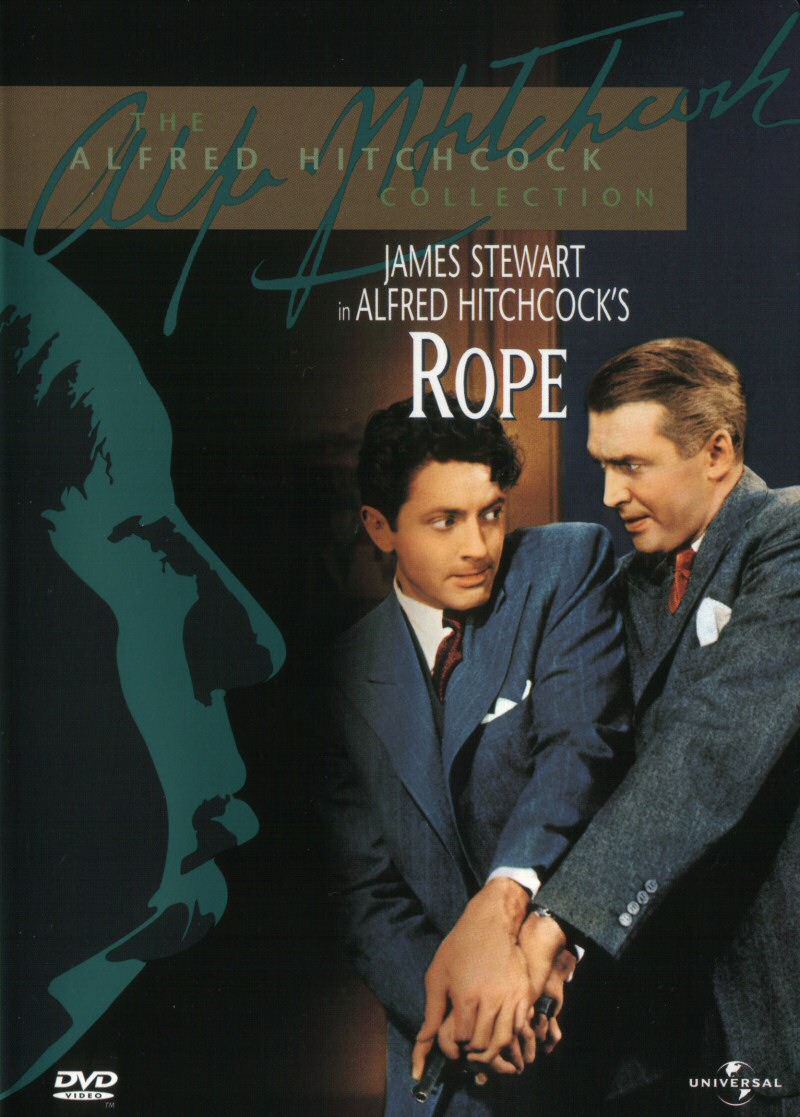
Rope
This film tells the story of two, young and wealthy men who strangle and murder their friend, just to purely see if they were able to get away with doing it. They then invite other close friends and the murdered man's parents, to a dinner party their hosting , whilst they are hiding the body in a chest that they are using to serve up food. Again just to see if they could get away with it.
Monday, 9 January 2012

Film Language
Camera
Camera Framing - Camera framing is basically looking and focusing on everything that is within that shot, and concentrating on its distance from the camera and which angle the shot is taken from.
Camera Movement - This is similar to camera framing in that with the way we move the camera can affect our attention on a certain character or object.
Mise-en-scene
This is a French term that basically means ' what is in the scene or frame'. If you were to take a simple shot of tree, by adding a deathly bird and and shooting in pitch black, there is a clear feeling or atmosphere you are creating. Contrasting to that by having a shot of a tree and having the sunlight shining and little birds on the branches, gives off a very different feeling and mood.
Settings and props - Settings in a film can be used to manipulate the audience by making them have certain expectations and the action that takes place is a complete contrast. Settings can be built from scratch using the plain walls and floor of a studio set, this is sometimes idea for film makers as they can show exactly what they want in this setting, although it does take a great deal of time to create and build. Props is the name given to objects that play a part in the scene. Rather than just being hidden and merging into the background.
Costume, hair and makeup - Costume plays a major part in films. When we see a character we instantly judge their character by the way they look,so it important the character is dressed appropriately and conveys the personality the filmmaker wants to come across. Make-up played a fair part in the early days of cinema and as it was used to highlight people's facial features as generally in black and white films that didn't register much detail.
Facial expressions and body language - When watching a film we look closely at someones facial expressions it can determine what kind of character that are. Facial expressions can usually show a clear thought or feeling towards something, even the look in someone's eyes can tell a lot about them. Body language can show us as an audience a clear relationship between two characters or even someone's personality. If they are huddled up and cover their face we could interpret that as being scared or shy and if they are standing upright, chest out this can show their confidence.
Lighting and colour - Lighting can play a major part in a scene as it can give a realistic look to a scene or even create an atmosphere, show suspicion of a character/object. It's main uses are to; highlight important characters/objects within a scene, making a character appear mysterious or reflecting a characters state of mind. The connotations that each colour has , has an importance to each and every scene its used in. We associate different colours with different moods/feelings and when they are shown in a film, us as an audience automatically suspect mood of the scene.
Positioning of characters and objects within a frame - The positioning of characters can be very important to the shot and can tell the audience alot about the character or create a specific atmosphere or mood. You can choose to place the character in the foreground of the shot and this completley draws your attension to them. Other examples are poisitoning a moving body against a background that appears stationary, or in the background of a shot.
Diegetic - is sound that comes from a source that is within the film world. For example this could be dialogue between characters or maybe a radio playing some music. It is basically sound that both the audience and characters can all hear.
Non-diegetic - is sound that is not part of the film word. For example this could scary, tension building music that plays over a specific scene within a film. It is sound that only the audience can hear, the characters are completley unaware.
Sound Bridges - is where sound that comes from one scene will continue on to play in the next. It is something that joins two scenes together.
Parellel - is sound that matches the action we see happening on the screen. An example of this is, a scene of children playing at a fairground, the music that accopanies this scene would be children laughing, screaming. Music/sounds that are exciting and match the feel of the scene.
Contrapuntal - is when the music or sound completley contrast with what is happening with the scene. For example having a tension building scene of someone opening a door, and the sound is happy and bright. This completley contrdicts the action happening within the scene.
Off- screen - is sound that we can hear but cannot necessarily see. For example if someone was to walk into the kitchen and put the kettle on, but the camera did not follow them into in the kitchen, then the sound made by the kettle would be off-screen sound.
Camera Framing - Camera framing is basically looking and focusing on everything that is within that shot, and concentrating on its distance from the camera and which angle the shot is taken from.
Camera Movement - This is similar to camera framing in that with the way we move the camera can affect our attention on a certain character or object.
- A panning shot - this is where the camera moves from side to side from a fixed axis
- A tilt shot - this is where the camera moves up and down from a fixed axis
- A crane shot - this is where the camera follows the action taking place, and moves along tracks laid out.
- A rolling shot - this is where the camera moves diagonally, this is quite oftenly used to make the characters come across ill or drugged.
Mise-en-scene
This is a French term that basically means ' what is in the scene or frame'. If you were to take a simple shot of tree, by adding a deathly bird and and shooting in pitch black, there is a clear feeling or atmosphere you are creating. Contrasting to that by having a shot of a tree and having the sunlight shining and little birds on the branches, gives off a very different feeling and mood.
Settings and props - Settings in a film can be used to manipulate the audience by making them have certain expectations and the action that takes place is a complete contrast. Settings can be built from scratch using the plain walls and floor of a studio set, this is sometimes idea for film makers as they can show exactly what they want in this setting, although it does take a great deal of time to create and build. Props is the name given to objects that play a part in the scene. Rather than just being hidden and merging into the background.
Costume, hair and makeup - Costume plays a major part in films. When we see a character we instantly judge their character by the way they look,so it important the character is dressed appropriately and conveys the personality the filmmaker wants to come across. Make-up played a fair part in the early days of cinema and as it was used to highlight people's facial features as generally in black and white films that didn't register much detail.
Facial expressions and body language - When watching a film we look closely at someones facial expressions it can determine what kind of character that are. Facial expressions can usually show a clear thought or feeling towards something, even the look in someone's eyes can tell a lot about them. Body language can show us as an audience a clear relationship between two characters or even someone's personality. If they are huddled up and cover their face we could interpret that as being scared or shy and if they are standing upright, chest out this can show their confidence.
Lighting and colour - Lighting can play a major part in a scene as it can give a realistic look to a scene or even create an atmosphere, show suspicion of a character/object. It's main uses are to; highlight important characters/objects within a scene, making a character appear mysterious or reflecting a characters state of mind. The connotations that each colour has , has an importance to each and every scene its used in. We associate different colours with different moods/feelings and when they are shown in a film, us as an audience automatically suspect mood of the scene.
Positioning of characters and objects within a frame - The positioning of characters can be very important to the shot and can tell the audience alot about the character or create a specific atmosphere or mood. You can choose to place the character in the foreground of the shot and this completley draws your attension to them. Other examples are poisitoning a moving body against a background that appears stationary, or in the background of a shot.
Editing -
- Straight cut
- A fade out
- A dissolve
- A wipe cut
- A jump cut
Diegetic - is sound that comes from a source that is within the film world. For example this could be dialogue between characters or maybe a radio playing some music. It is basically sound that both the audience and characters can all hear.
Non-diegetic - is sound that is not part of the film word. For example this could scary, tension building music that plays over a specific scene within a film. It is sound that only the audience can hear, the characters are completley unaware.
Sound Bridges - is where sound that comes from one scene will continue on to play in the next. It is something that joins two scenes together.
Parellel - is sound that matches the action we see happening on the screen. An example of this is, a scene of children playing at a fairground, the music that accopanies this scene would be children laughing, screaming. Music/sounds that are exciting and match the feel of the scene.
Contrapuntal - is when the music or sound completley contrast with what is happening with the scene. For example having a tension building scene of someone opening a door, and the sound is happy and bright. This completley contrdicts the action happening within the scene.
Off- screen - is sound that we can hear but cannot necessarily see. For example if someone was to walk into the kitchen and put the kettle on, but the camera did not follow them into in the kitchen, then the sound made by the kettle would be off-screen sound.
Continuity editing, cause and effect plotting, enigmas, red-herrings and cliffhangers
Continuity Editing - The clear stablishment of 'cause and effect' plotting , which shows a characters motivations and helps to unravel an interesting story that proceeds logically and steadily.
Enigmas - An enigma is something difficult to solve, like a puzzle within the film. It is usually ,in thrillers, something that the main character has to try to figure out to deafeat the villain before the film finishes.
Red-herrings - A Red-herring is something that misleads or distracts us from the truth. For example in North by northwest the red herring in that film is Eve Kendall, she is working as a double agent for the government and misleads us when at first she helps Roger Thornhill. Then it seems to us that she is working with the villains, but in reality she just had to pretend to be working with them to be able to bring them down.
Cliffhangers - A cliffhanger is usually the part of a film where the main character is in a precarious or fdifficult situation or are confronted with a shocking revelation. This is what will keep the audience interested in the film as they want to watch the situation unravel and be resolved.
Enigmas - An enigma is something difficult to solve, like a puzzle within the film. It is usually ,in thrillers, something that the main character has to try to figure out to deafeat the villain before the film finishes.
Red-herrings - A Red-herring is something that misleads or distracts us from the truth. For example in North by northwest the red herring in that film is Eve Kendall, she is working as a double agent for the government and misleads us when at first she helps Roger Thornhill. Then it seems to us that she is working with the villains, but in reality she just had to pretend to be working with them to be able to bring them down.
Cliffhangers - A cliffhanger is usually the part of a film where the main character is in a precarious or fdifficult situation or are confronted with a shocking revelation. This is what will keep the audience interested in the film as they want to watch the situation unravel and be resolved.
Sunday, 8 January 2012
Maguffin
A maguffin is an object, or rarely a person which is the centre of most stories within the film but as the film continues we find that it is not important.
An example of this in the Alfred Hitchcock film 'Psycho' would be the 40,000 that Marion steals. At the start of the film everything is mainly focused on the money, but as the film carries on its importance decreases ad we completely forget about it.
An example of this in the Alfred Hitchcock film 'Psycho' would be the 40,000 that Marion steals. At the start of the film everything is mainly focused on the money, but as the film carries on its importance decreases ad we completely forget about it.
Suspense & Shock
Suspense is being uncertain of what is going to happen . In the film world it keeps you on the edge of your seat, wondering whats going to happen next.Suspense is similar to tension and can be built many different ways. For example non diegetic, music overplaying in an important and crucial scene will help to build the tension and keep you wondering.
An example where suspense is used in a film is 'Sabotage'. We are constantly wondering if Stevie is going to make it off the bus and deliver the bomb in time. Alfred Hitchcock cleverly plays ticking noises;like a clock, over the top of these scenes to create tension and build the suspence.
'Luck is everything... My good luck in life was to be a really frightened person. Im fortunate to be a coward to have a low threshold of fear, because a hero couldn't make a good suspense film.' - Alfred Hitchcock
Shock is something suddenly happening, for example a bomb explosion, crash etc. There is no tension or atmosphere to be built up to this moment, because as an audience we are unaware anything is going to happen and are just as surprised as the characters within the film.
An example of where shock is used is in a film called ' Children of Men'. A male character enters a shop to buy coffee whilst everyone is crowded around the T.V watching the news. He leaves the shop and as the camera slowly moves around we see the shop he was just in, blow up. This is a shock to us because we didn't know there was any bomb planted.
An example where suspense is used in a film is 'Sabotage'. We are constantly wondering if Stevie is going to make it off the bus and deliver the bomb in time. Alfred Hitchcock cleverly plays ticking noises;like a clock, over the top of these scenes to create tension and build the suspence.
'Luck is everything... My good luck in life was to be a really frightened person. Im fortunate to be a coward to have a low threshold of fear, because a hero couldn't make a good suspense film.' - Alfred Hitchcock
Shock is something suddenly happening, for example a bomb explosion, crash etc. There is no tension or atmosphere to be built up to this moment, because as an audience we are unaware anything is going to happen and are just as surprised as the characters within the film.
An example of where shock is used is in a film called ' Children of Men'. A male character enters a shop to buy coffee whilst everyone is crowded around the T.V watching the news. He leaves the shop and as the camera slowly moves around we see the shop he was just in, blow up. This is a shock to us because we didn't know there was any bomb planted.
Subscribe to:
Comments (Atom)